Plan at municipal scale.
Flood resilience is a billion-dollar infrastructure problem. Campaign funds are enabling and local unless Toronto Water, TRCA, Ontario or Canada fund major works.

Climate policy has to connect buildings, transportation, flooding, extreme heat, natural systems, electricity, waste and resilience - while making Toronto greener, cooler and more beautiful.
Climate & Resilience · One connected plan — better everyday life, more human capability, stronger civic capacity, better infrastructure and environmental stewardship all serve the same goal: a better life for people and a healthier future.
See how it connects →Natural systems—trees, ravines, soil, wetlands and shoreline—are infrastructure for cooling, drainage and resilience.
Flood resilience is a billion-dollar infrastructure problem. Campaign funds are enabling and local unless Toronto Water, TRCA, Ontario or Canada fund major works.
Trees, shade, cooling centres, building resilience, public space and power continuity.
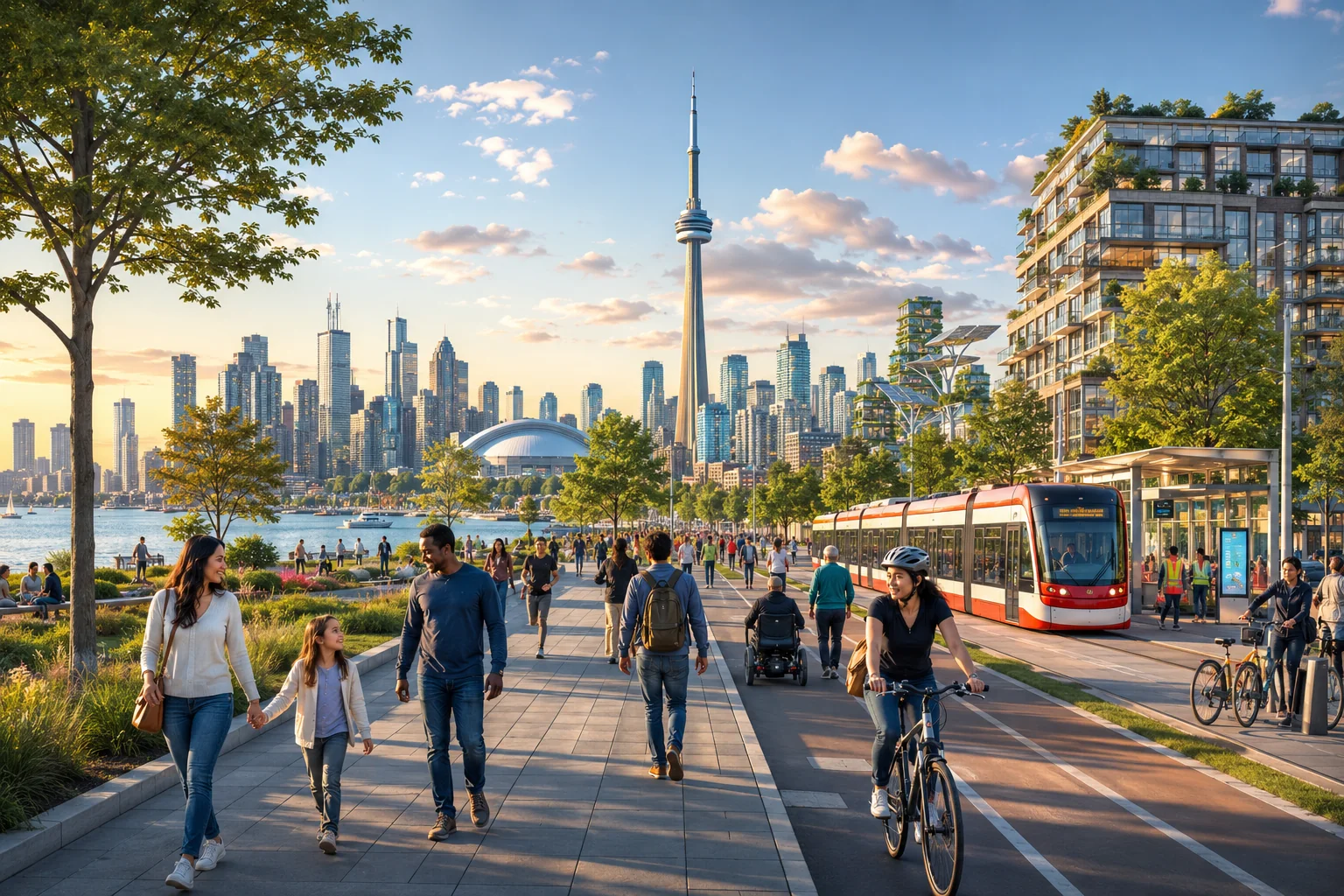
More trees and shade, healthier ravines, native planting, rain gardens, greener transit corridors and better-maintained public spaces should make climate investment visible in daily life.
Repair, recovery, reuse and waste heat only where lifecycle economics and operating practicality support them.
Flood protection, cooling, reliable power, natural systems and state of good repair must be planned at the scale of the actual municipal systems that carry the risk.

A serious citywide campaign needs people, resources and neighbourhood support to reach voters across Toronto.
Show support where you live and help build visible momentum.
Order a sign →Residents, community leaders, artists and organizations can add their support.
Submit an endorsement →Bring neighbours together and help the campaign listen across Toronto.
See events →Receive announcements, policy releases and ways to take action.
Join the list →